Op. Dr. Bora Yücel
Breast Implant Replacement:


Breast implant replacement is the procedure of removing a previously inserted breast implant and replacing it with a new one. This procedure is sometimes performed for medical reasons and sometimes purely at the individual's request. That is, the implant may have become worn out, and the desired shape may have changed, or the individual may now want a different size or shape of silicone implant.
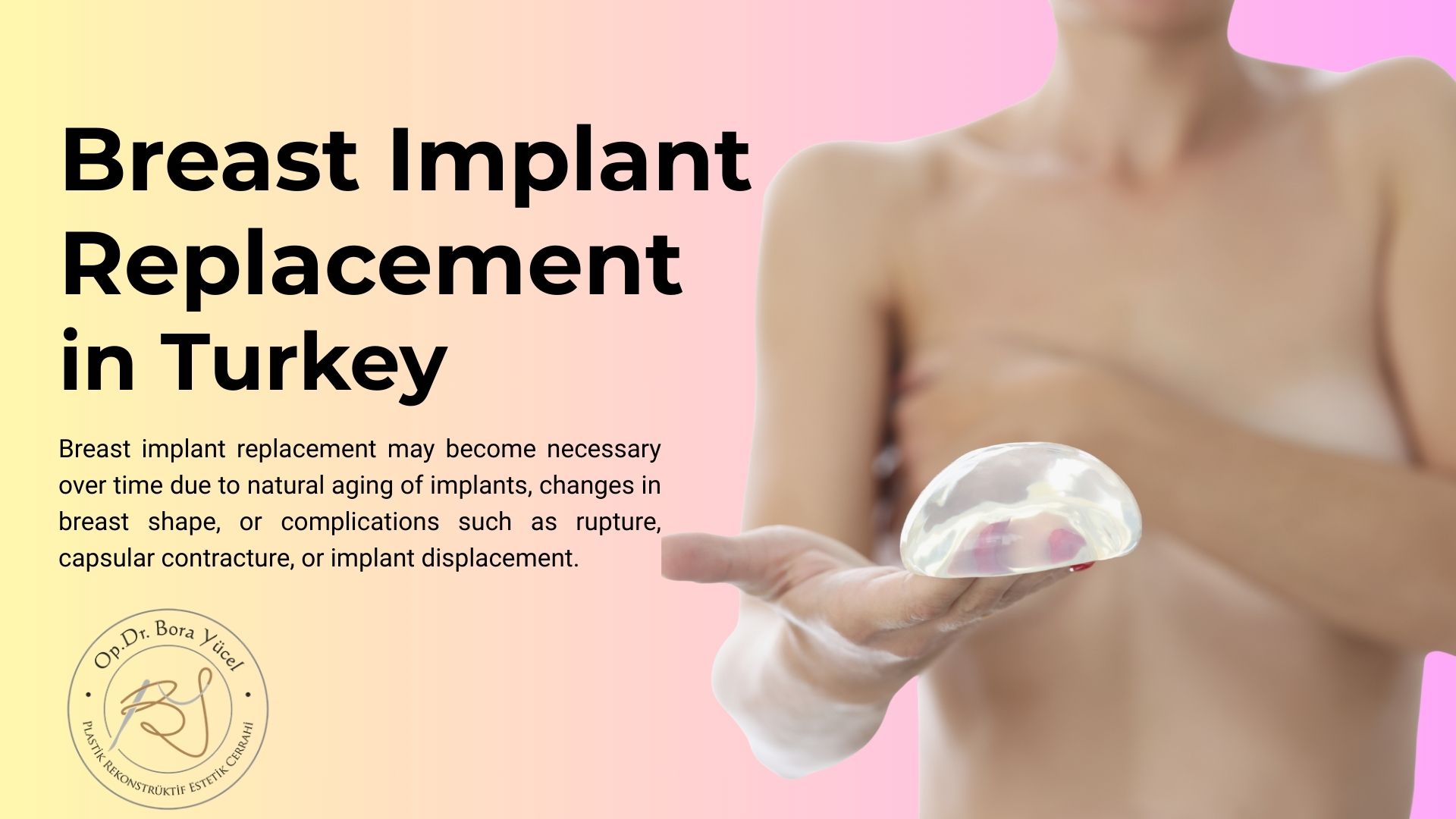
Breast implant replacement surgery is performed at the patient's request or for medical reasons. All tests are carried out during the examination, and a decision is made regarding the surgery.
Reasons to get your breast implants replaced
Breast implant replacement is usually performed not because of a problem, but due to needs that arise over time. The body is a living structure and changes over the years. Weight may be gained or lost, pregnancy and breastfeeding may occur, and age-related changes may be seen. Naturally, the position and fullness of the breasts and the individual's expectations may change.
In some patients, the implants were inserted years ago and no longer provide sufficient form. Breast augmentation surgery may be desired to achieve a fuller or, conversely, a more natural appearance. Sometimes the breast tissue has sagged, and the existing implants are insufficient to correct this appearance. Combined breast lift and breast augmentation surgery may be required. In this case, mastopexy is performed along with appropriate implant replacement.
Another reason for this procedure is the limited lifespan of silicone implants. While new-generation silicone implants can be used for life, older silicone implants have a limited lifespan. Over time, they can wear out, shift position, or cause a hardness in the breast that you may be able to feel. In such cases, silicone replacement may be performed if deemed appropriate by the surgeon during a check-up.
Mastectomy (surgical removal of one or both breasts) is performed to create a natural-looking breast, to correct congenital defects and deformities of the chest wall, or to enhance the appearance of the breast in conjunction with cosmetic breast augmentation surgery.
How is breast implant replacement surgery performed?
First, a detailed examination and consultation are conducted. The condition of the existing silicone, the shape of the breast, the skin structure, and the patient's expectations are assessed during this consultation. Ultrasound or MRI scans may also be performed to facilitate a more thorough assessment.
The surgery is performed under general anaesthesia. Therefore, there is no pain felt during the silicone replacement procedure.
The incision is usually made at the site of the previous scar. This prevents the formation of a new scar. After the old silicone is carefully removed, the tissues surrounding it are examined and cleaned or reshaped if necessary. This stage is very important. This is because the proper positioning of the new silicone depends on this stage being performed with great care.
The new silicone is inserted. After the necessary checks are performed, the layers are closed anatomically. The incisions are closed with stitches.
Recovery process following breast implant replacement
The first few days
It is normal to experience tightness, fullness and mild pain in the chest the first few days after surgery. This should not alarm you. Using the painkillers prescribed by your doctor correctly will help you get through the initial recovery period more comfortably. You should avoid sudden and sharp arm movements during the first few days. In particular, you should not raise your arms. The best sleeping position is on your back. Also, you should definitely not remove the special surgical bra provided to you during this period. This bra helps support the breasts while they heal in the correct position.
The most important thing to do during this period is to rest. What you should not do is push yourself by saying, "I'm fine." Lift heavy objects, do housework, or exercise.
From the second week
After the first week, the body begins to relax. The swelling gradually subsides, and movements become more natural. You can return to your daily life in a controlled manner. However, you should still avoid movements that strain your arms, such as heavy lifting or overhead activities, to ensure proper healing. If massage is necessary, your plastic surgeon will definitely explain to you how and when to do it.
After 4-6 weeks
Within approximately 4–6 weeks, the breast adapts to the new silicone. The texture of the breasts is now softer. The breast shape is now largely settled.
Advantages of breast implant replacement
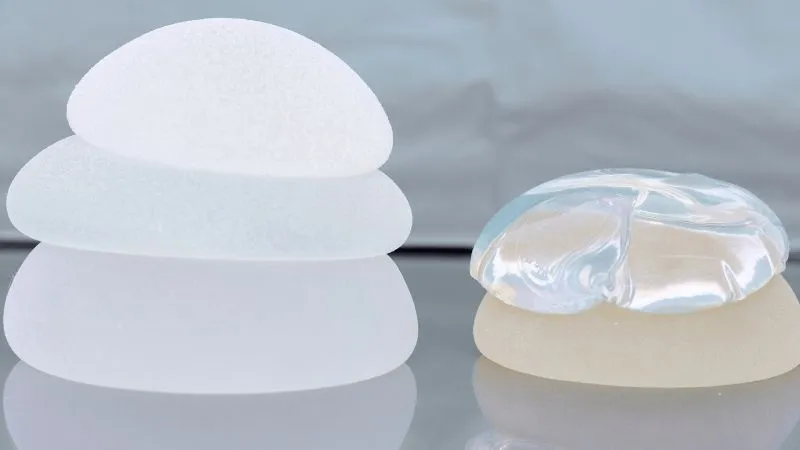
- A more balanced appearance with the body is achieved.
- Deformed or functionally inadequate silicone implants are replaced, resolving issues.
- Complaints such as breast firmness and discomfort are eliminated.
- The breast shape is restored to a more balanced and natural appearance.
- It helps the breast tissue to recover more evenly and in a controlled manner.
- It ensures that clothing fits better on the body.
- It helps to maintain the shape of the breast in a healthier way in the long term.
Risks and complications of breast implant replacement surgery
Serious complications or risks are not usually seen after breast implant replacement surgery. However, it is essential to proceed with an experienced aesthetic and plastic surgeon.
As it is a surgical procedure, there are potential risks involved. Common complications may include breast pain, rashes, skin changes, temporary swelling, bruising, risk of infection, tearing, asymmetry, and, rarely, hardening around the implant.
Breast implant replacement cost in Turkey
For breast implant replacement prices, you must first have a consultation. This is because there are various factors that determine the price. The brand, size, and type of silicone used, as well as the hospital standards where the surgery will be performed, are decisive factors in the price. Possible additional procedures (such as tissue correction or capsule removal) may also increase the price.
For current breast implant replacement prices, please contact us.
Choosing the best surgeon for breast implant replacement in Turkey, Antalya.
- Consult a plastics surgeon who actively practices breast surgery.
- Ensure that the doctor frequently performs breast implant replacement surgery.
- Be sure to research the doctor's experience in this field and the number of cases they have handled.
- Review the results of their previous implant replacement surgeries.
- Ensure that the surgeon offers you personalised options rather than recommending a single type of implant.
- Be sure to find out how the surgeon manages the postoperative follow-up process.
- Ensure that the surgeon is accessible and that the surgical team is communicative.
- Enquire about the facilities at the hospital where the surgery will be performed.
- Do not base your decision solely on price. This is the most common mistake.
How long do breast implants last?
Medical problems may occur after breast implants are fitted, which affects the lifespan of the silicone. The lifespan of breast silicone may vary depending on the quality of the silicone, body structure, weight changes, pregnancy, trauma suffered and whether regular doctor check-ups are carried out. The average lifespan of silicone is approximately 10-15 years.
Breast implants are replaced on average every 10-15 years, when necessary or when recommended by your doctor.
How long are breast implants good for?
Once silicone breast implants have been placed, they can be used for life if no medical problems arise. However, the effects of ageing may necessitate replacement of the breast silicone.
I’ve had my breast implants for 10 years.
While many breast implants last longer than 10 years, regular medical evaluations are recommended to assess their condition and ensure there are no issues such as rupture, capsular contracture, or changes in shape. Regular follow-ups help maintain both safety and aesthetic results.
I’ve had my breast implants for 20 years.
After 20 years, it is common and good for patients to consult a surgeon to evaluate the condition of the implants and determine whether replacement or removal may be recommended for health, comfort, or aesthetic reasons.
I’ve had my breast implants for 30 years.
Breast implants can last many years; however, they are not considered lifetime devices. After 30 years, factors such as implant wear, changes in breast tissue, or capsular contracture may lead doctors to recommend an evaluation or possible replacement.
Since older implants are more likely to experience problems at this point, we typically advise removing or replacing them.
What happens if you don t replace breast implants?
Breast implants may eventually have problems, including rupture, leaking, or capsular contracture (hardening of the surrounding tissue) if they are not replaced as advised. Changes in breast form, pain, or inflammation can also result from ageing implants. Both safety and cosmetic results are maintained with timely replacement and routine monitoring.
Complications are more likely to occur the longer you have your breast implants in place. For this reason, it is generally advised to have breast implants taken out or replaced every ten to fifteen years.
Breast Implants Before and After in Turkey, Antalya
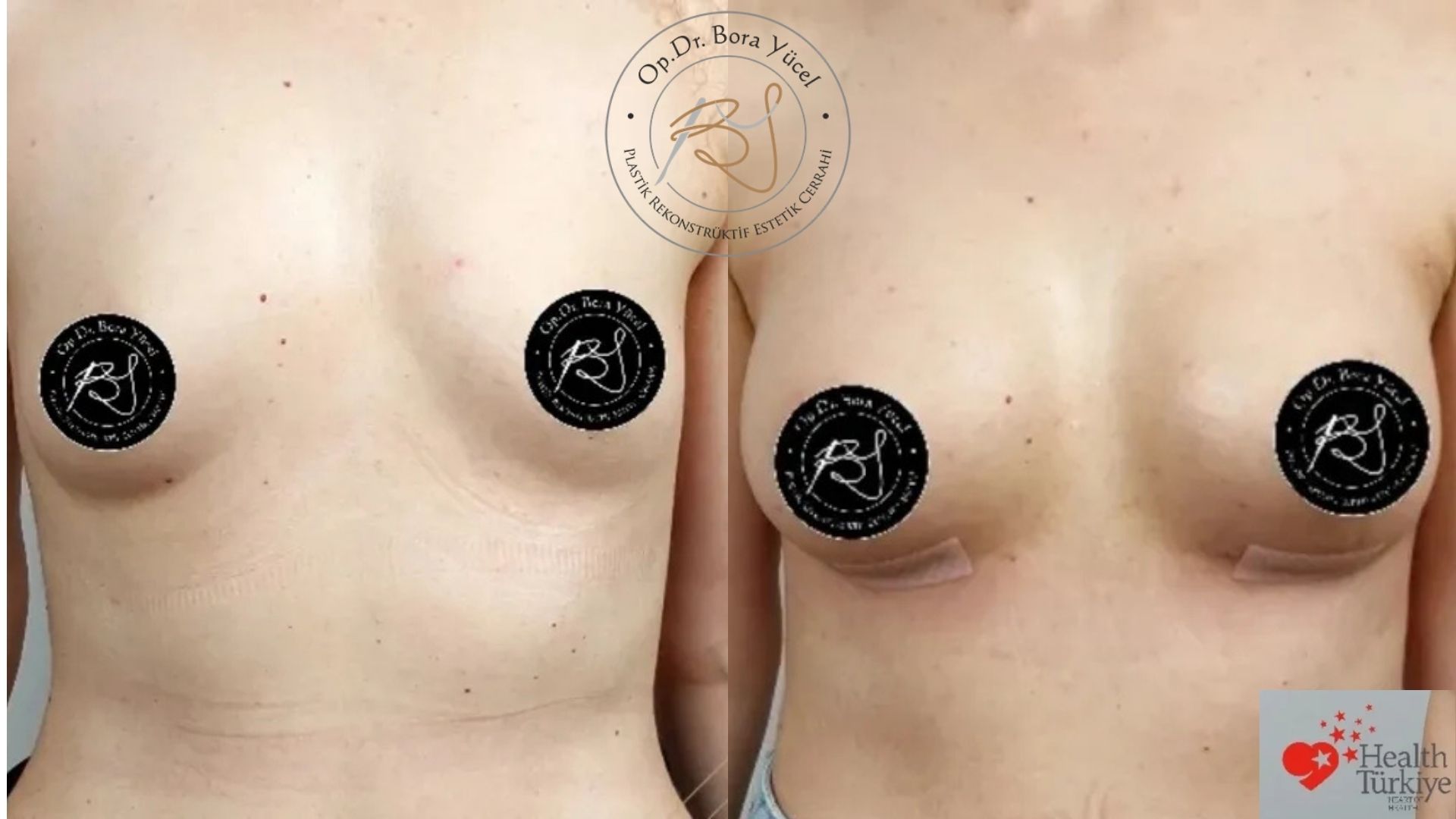
After : December 2024
Before: November 2024
The outcome of any surgical or medical procedure can vary from person to person. We recommend discussing the possible outcomes of the surgery or procedure in detail with your surgeon beforehand.
Our patient has given permission to share the photo. We thank our patient for granting this permission.
These posts are made to inform our patients abroad about the procedures.
This text is for informational purposes only. Your doctor's recommendations should be followed.
Please contact us for more information.