Op. Dr. Bora Yücel
Lipoedema Surgery & Treatment in Turkey, Antalya

What is lipoedema?
Lipoedema is a chronic condition characterised by the abnormal, symmetrical accumulation of fatty tissue in the legs, hips and, sometimes, the arms. It almost always affects women. It usually begins during adolescence, after the first pregnancy or at the onset of the menopause - in other words, during periods of significant hormonal fluctuations.
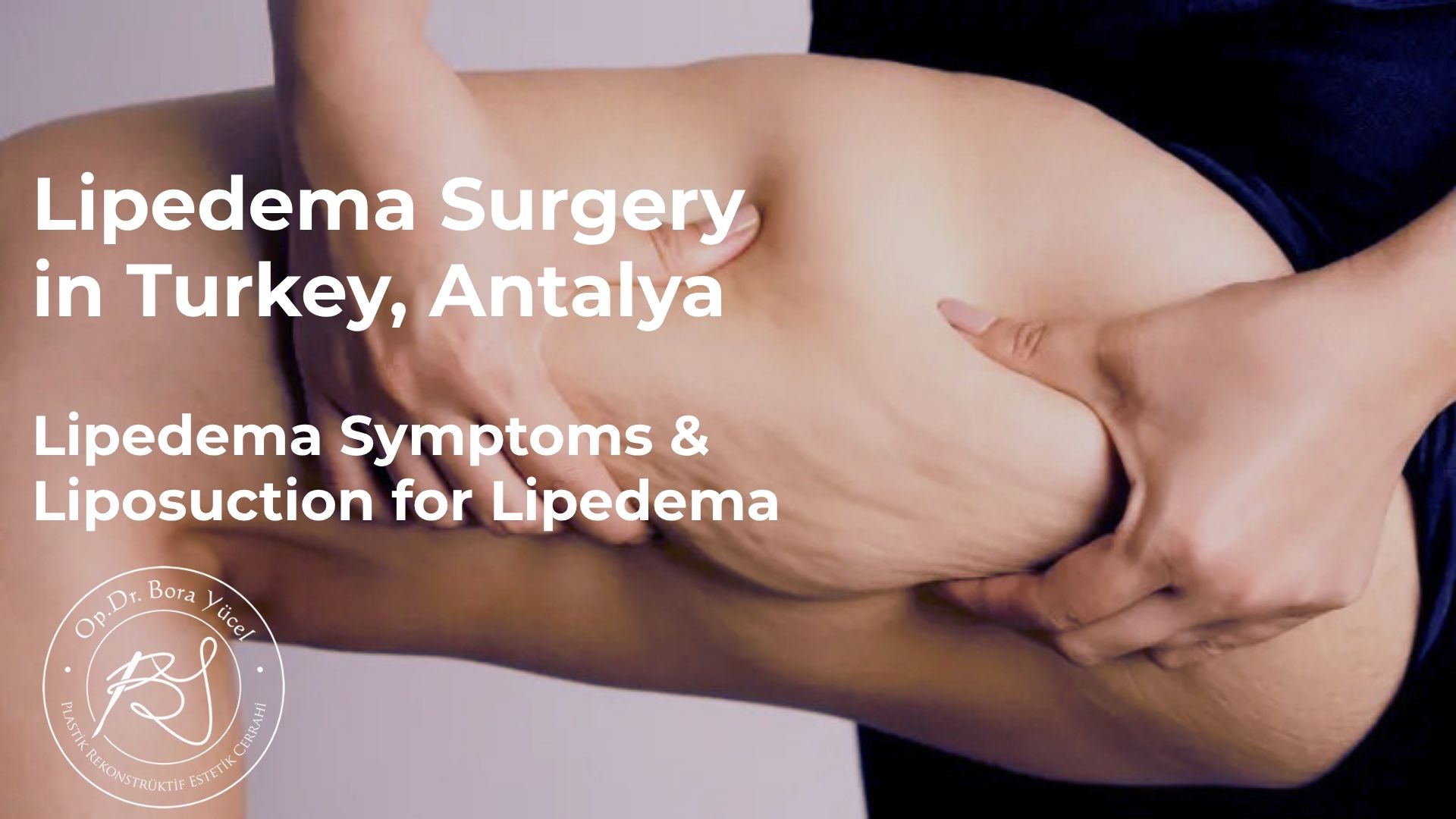
The stark contrast between the upper and lower body immediately draws attention. The upper body may appear relatively slim, while the lower body is disproportionately enlarged. This fat is not ordinary. It remains the same even when you diet, go for a run or cycle.
And it is not merely an aesthetic issue. Over time, pain sets in, sensitivity increases upon touch, and walking becomes more difficult. If left untreated, it can develop into lymphoedema; this is known as lipo-lymphoedema, and reversing it is much more difficult.
Lipoedema Symptoms
Although these vary from person to person, certain symptoms are common.
The most typical symptom is disproportionate, persistent fat accumulation in the legs and hips. While the upper body is slim, the lower body does not appear proportionate to it. There is a distinct boundary just above the ankle; the fat stops there, sparing the foot. This boundary is a very important detail that distinguishes lipoedema from lymphoedema.
Another typical symptom is pain. People with lipoedema often report that their legs hurt a great deal when they bump them against something. Small lumps of fat can be felt under the skin; in the literature, this is referred to as the ‘rice grain sensation’.
Bruising may appear on the legs following even a minor knock. In the evenings, the sensation of heaviness and swelling in the legs intensifies. In advanced stages, the skin surface becomes uneven, taking on an appearance resembling orange peel.
Lipoedema Stages
Lipoedema progresses through four stages. The stage at which it is diagnosed directly determines how treatment is planned.
- In stage 1, the skin’s surface is smooth, but soft nodules can be felt beneath the skin. The legs are full but still retain their shape.
- In Stage 2, irregularities begin to appear on the surface, and the ‘orange peel’ appearance becomes more pronounced. The nodules are more clearly palpable.
- In Stage 3, the tissue hardens. Large fat lobes on the inner thighs and around the knees begin to sag. The legs rub against each other whilst walking, causing discomfort.
- In stage 4, lymphoedema also develops. As lymphatic circulation is impaired, the legs are constantly swollen, and symptoms worsen significantly.
Lipoedema treatment is much easier when diagnosed early, and the results are far more satisfactory. If diagnosis is delayed, some symptoms may become irreversible.
Lipoedema and obesity: What's the difference?
Most people with lipoedema spend years believing they are overweight and need to lose weight. They go from one dietitian to another, go on countless diets, and then put the weight back on. Over time, this cycle turns into psychological distress. Yet the condition we are dealing with is not classic obesity.
In obesity, fat is distributed proportionally throughout the body and can be reduced through diet and exercise. In lipoedema, fat accumulates only in specific areas: the legs, hips and arms. The abdomen and chest are usually spared. Moreover, the structure of this fat is different: it is firm, painful and stubborn.
It is also important to distinguish it from lymphoedema. Lymphoedema is generally unilateral and affects the foot as well. Lipoedema develops symmetrically in both legs, while the feet remain unaffected. The Stemmer’s test we perform during the examination is negative in lipoedema and positive in lymphoedema.
Causes of lipoedema
The exact cause of the condition is still not fully understood. However, there are a few things we do know.
Genetic predisposition is the primary factor. If a mother or aunt has lipoedema, the likelihood of it occurring in daughters is quite high. Therefore, obtaining a family history is essential for diagnosis.
The second factor is hormones, particularly oestrogen. It is no coincidence that lipoedema often begins during puberty, pregnancy, after childbirth or at menopause. The condition is almost exclusively seen in women. It is rarely observed in men; when it does occur, it is usually accompanied by a hormonal disorder.
In addition to these, microcirculatory problems, abnormal growth of fat cells and chronic inflammation are other mechanisms that play a role in the process.
Lipoedema treatment
Treatment generally begins with conservative methods. Manual lymphatic drainage massage, compression stockings, an anti-inflammatory diet, low-impact exercises (swimming, cycling, walking).
All of these are beneficial. They slow the progression of the condition, alleviate symptoms, and improve comfort throughout the day. However, none of these eliminate the accumulated pathological fat.
In other words, even if the patient has massages for years, wears compression stockings every day, and follows a perfect diet, the existing lipoedema fat will remain. This situation is precisely where surgery becomes relevant.
Liposuction for Lipoedema
Liposuction is currently the most effective and long-lasting method for treating lipoedema. However, it is important to note that liposuction performed for lipoedema differs from conventional liposuction carried out for aesthetic purposes.
The aim of traditional liposuction is to slim the body. In lipoedema, the aim goes far beyond this procedure: it involves selectively removing the diseased fat tissue whilst taking care not to damage the lymphatic vessels. The aim is to eliminate years of pain, tenderness and restricted mobility.
Which liposuction technique is used to treat lipoedema?
There are three techniques commonly used for lipoedema.
Tumescent liposuction is the most traditional method. A special saline solution is injected into the area, and the fat is suctioned out using cannulas. When performed by a skilled practitioner using the ‘lymph-sparing’ technique, which protects the lymphatic vessels, it remains an effective option.
Vaser liposuction is an advanced method that utilises ultrasound energy. It selectively removes fat cells by liquefying them without affecting the surrounding tissues. As lipoedema fat has a dense and fibrous structure, Vaser offers a distinct advantage in this condition. Furthermore, it helps to improve skin tightening.
Water-assisted liposuction (WAL) is a technique that gently separates fat cells using low-pressure water jets without compressing them. As it causes minimal damage to the lymphatic system, it is frequently preferred for lipoedema.
Which technique is most suitable depends on the patient, the stage of the condition, the structure of the tissue and skin elasticity. In most cases, a single technique is not used on its own; combined approaches yield better results.
How long does lipoedema liposuction take?
The surgery is performed under general anaesthesia or sedation. Rather than treating all areas in a single session, the procedure is usually spread over 2–3 sessions. This method is much better for both the safety of the patient and the quality of the recovery. Each session targets a specific area – for example, the inner and outer thighs in the first session, followed by the knees and calves in the next.
The duration varies depending on the size of the area being treated, averaging 2–4 hours. Patients are usually discharged on the same day or the following morning.
Who is a good candidate for lipoedema liposuction?
Lipoedema liposuction is most suitable for individuals who have been diagnosed with lipoedema and continue to experience symptoms despite conservative treatments such as compression therapy, manual lymphatic drainage, exercise and dietary modifications.
Good candidates usually experience persistent pain, tenderness, swelling and a feeling of heaviness in the legs or arms, together with disproportionate fat deposits that do not respond to weight loss. The procedure can also significantly improve mobility, body contour and overall quality of life.
Ideal candidates are in good general health, have realistic expectations and are committed to maintaining a healthy lifestyle after surgery. Although liposuction can permanently remove diseased fat cells and provide long-term symptom relief, it is not considered a cure for the underlying condition.
An experienced plastic surgeon can determine whether surgery is appropriate after a comprehensive assessment. The stage of lipoedema, skin quality, lymphatic function and overall health will all influence the treatment plan and expected outcome.
The recovery process after lipoedema surgery
Swelling, bruising and pain are to be expected in the first few days. These are temporary. The two key factors determining recovery are correct compression and regular lymphatic drainage.
Compression garments should be worn regularly for at least 4–6 weeks. This both accelerates the reduction of swelling and helps the skin to adapt to its new contours. Manual lymphatic drainage massage begins from the first week onwards; the treatment provides significant support in accelerating the process.
Patients generally return to their daily lives within 7–14 days. They should avoid strenuous exercise for 6–8 weeks.
It takes 3–6 months for the final results to stabilise. This is because it takes time for the tissues to settle, for the last traces of swelling to subside and for the skin to recover.
Is liposuction for lipoedema permanent?
Yes, because the fat cells removed during liposuction do not return. They are permanently removed from the body. In other words, the affected fat removed during the operation is not regenerated.
However, lipoedema is a condition with genetic and hormonal origins. Therefore, it would not be accurate to speak of a complete cure. The surgery alleviates the current burden of the condition, significantly reduces symptoms, and halts its progression. Provided the patient maintains a healthy lifestyle, does not neglect compression therapy, and keeps up with their annual check-ups, the benefits will be sustained for many years.
The correct surgical technique relieves the vast majority of patients from the pain they have endured for years. Movement becomes easier. For most, the procedure brings not only physical relief but also a sense of psychological liberation.
Lipoedema Surgery in Antalya, Turkey
Lipoedema is a condition that was mistaken for obesity for years but actually requires serious treatment. Early diagnosis and the right surgical approach can transform a patient’s life, both physically and psychologically.
If you’ve been bothered for a long time by disproportionate fat accumulation in your legs, as well as swelling and tenderness that don’t respond to diet, the first step is to consult a plastic surgeon. You can schedule an appointment at Dr. Bora Yücel’s clinic in Antalya for a lipoedema evaluation and liposuction treatment.
Frequently Asked Questions
For safety and optimal results, it is better to divide the treatment into 2–3 sessions. Allow 2–3 months between sessions.
The fat cells that are removed do not return, but the remaining ones may grow. Nevertheless, the results are largely maintained, and the body does not revert to its previous state.
The surgical entry holes are 3–4 mm in size. Over time, they fade and become invisible.
Office workers can return to work in 7–10 days. For those who do physical labor, 3–4 weeks is recommended.
This text is provided for informational purposes only. You should follow your doctor’s advice. For further information, please contact Op. Dr Bora Yücel.
Please contact us for more information.