Op. Dr. Bora Yücel

Mastectomy is performed for the treatment of breast cancer or to prevent the disease. Specialists in oncology and aesthetic and plastic surgery may perform additional surgical procedures designed to have a positive impact on the patient’s psychological well-being, such as breast reconstruction or cosmetic enhancements, which can help improve body image and emotional recovery after a mastectomy.
What is a mastectomy?
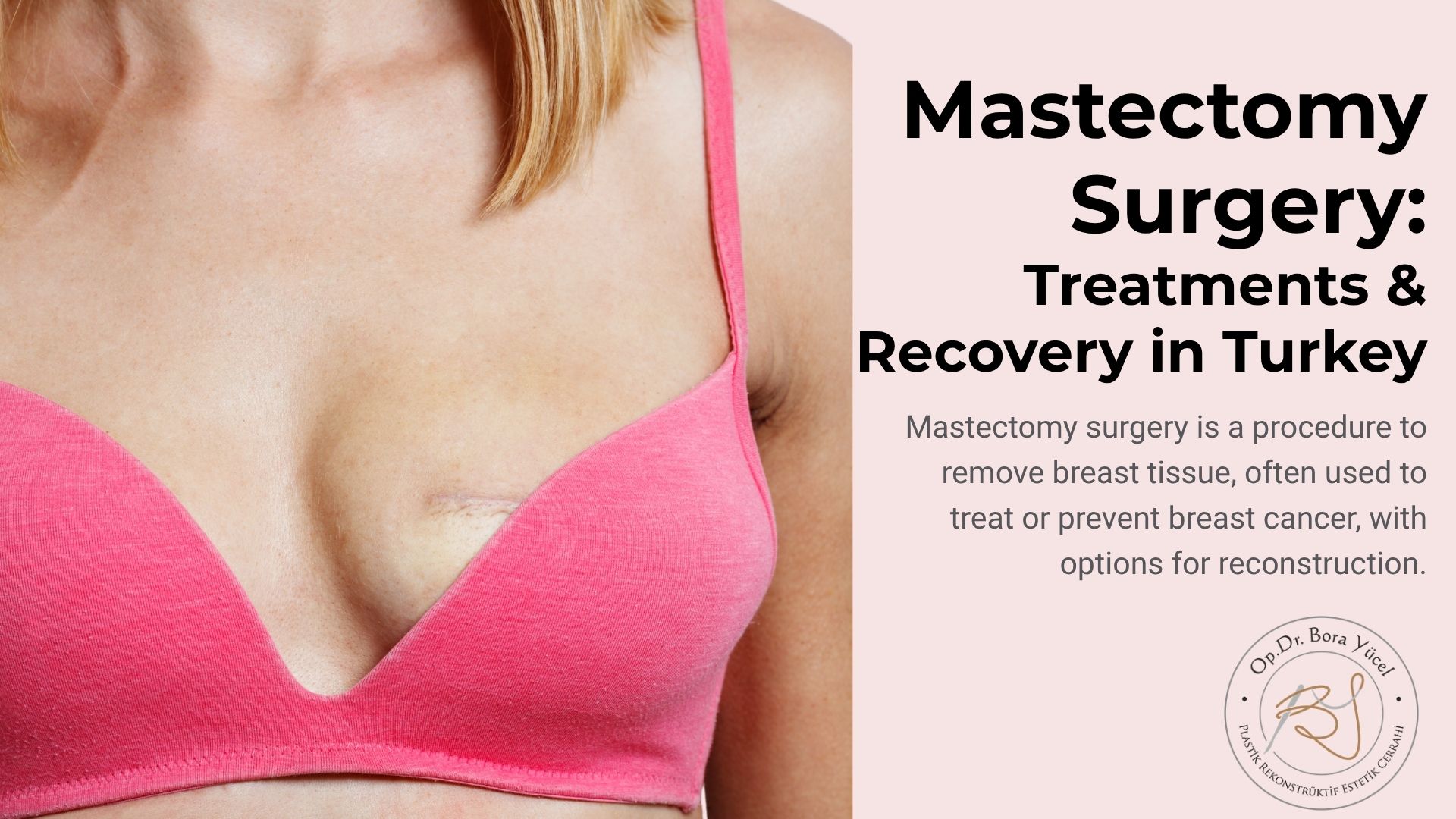
A mastectomy is a surgical procedure performed to treat breast cancer or for preventive purposes in individuals at high risk of developing the disease. During this operation, surgeons remove either completely or partially the breast tissue identified as diseased or at risk of developing cancer in the future.
The methods used to treat breast cancer include chemotherapy, radiotherapy, hormonal therapy and surgical treatment. Surgical treatment, specifically mastectomy, is the most commonly used method, involving the removal of all or part of the breast affected by cancer.
Types of Mastectomy
A mastectomy can be performed in different ways depending on factors such as the extent of the disease, the stage of the cancer and the individual’s risk profile. The surgical approach varies according to the amount of tissue removed and the structures preserved. The most common types of mastectomy are as follows:
Modified radical mastectomy (Total mastectomy)
In this surgical procedure, the entire breast is removed. In a radical mastectomy, the axillary lymph nodes and the muscles of the chest wall are also removed.
In a total mastectomy, the chest muscles are preserved. Nowadays, these operations are generally preferred in cases where the tumour has spread or where other surgical options are insufficient.
Subcutaneous mastectomy
In subcutaneous mastectomy, only the breast tissue is removed, whilst the breast skin, nipple and areola—the area surrounding the nipple—are preserved. We generally consider this approach for patients for whom we have planned reconstructive surgery and are considering breast reconstruction during the same procedure. However, it is not suitable for every patient. Oncological safety is the primary consideration in this process.
Skin-Sparing Mastectomy (SSM)
In this procedure, the breast tissue, along with the nipple and areola, is removed. During the procedure, most of the breast skin is preserved. It is the preferred surgical option for patients at risk of tumours around the nipple. The preservation of the skin in this procedure offers a significant advantage in terms of reconstruction.
Prophylactic Mastectomy
Prophylactic mastectomy is a preventive surgical procedure performed on patients who have not yet been diagnosed with breast cancer but are at high risk due to a genetic predisposition or family history. The aim is to significantly reduce the risk of developing breast cancer. This decision is made following detailed discussions with the patient, as well as multidisciplinary assessments and thorough investigations.
Mastectomy and reconstruction
A mastectomy is a surgical procedure in which cancerous tissue or breast tissue with a high risk of developing cancer is removed, either completely or partially. The primary aim is to bring the disease under control.
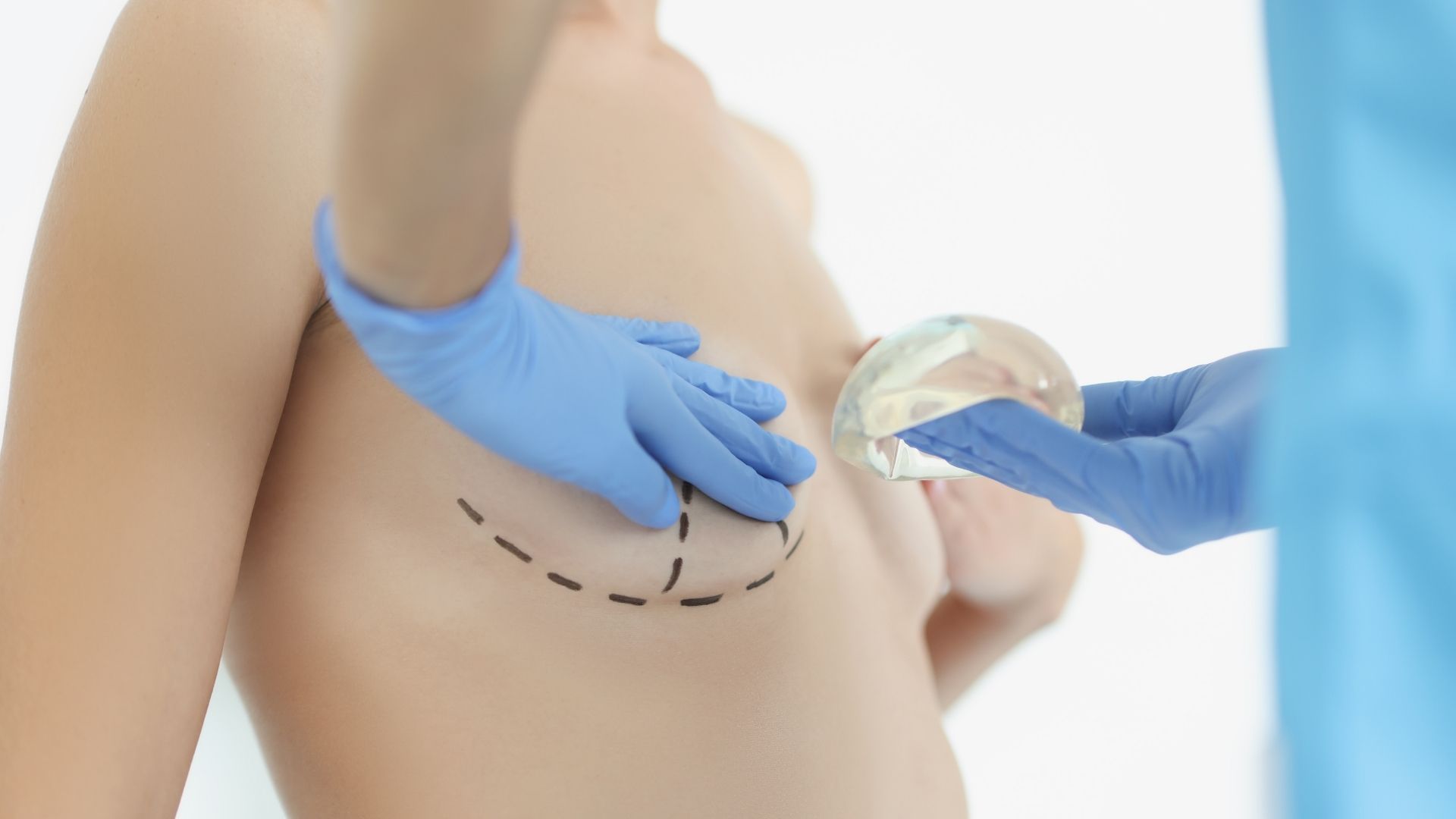
What we refer to as reconstruction is the reshaping of the removed breast. This reshaping procedure is carried out using two methods: the placement of a breast implant during the same operation as the mastectomy or the placement of a breast implant after the cancer treatment process has been completed. We do not decide on our own which method is the right one for the patient. The treatment process, any additional treatments required, and the patient’s wishes are the determining factors here.
It is particularly worth noting that undergoing reconstruction does not increase the risk of the cancer returning. Furthermore, not everyone is obliged to undergo this treatment, as some patients may choose alternative options based on their personal circumstances and preferences. The decision is a choice that must be fully respected.
Primary Reasons for a Mastectomy:
Generally, this surgical procedure is performed in the following situations:
- When breast cancer is diagnosed
- When the tumour covers a large part of the breast
- When the cancer is present in multiple areas of the breast
- When breast-conserving surgery is deemed insufficient
- When there is a high risk of the cancer recurring
- In patients who are not suitable for radiotherapy
- In individuals with a very high risk of cancer due to genetic mutations such as BRCA
- In patients with a strong family history who wish to undergo preventive surgery
The recovery process following a mastectomy
The recovery process following a mastectomy varies from person to person. The symptoms experienced during this process are generally the same. It is important to understand that your body enters a recovery phase after the operation. The first few days may be a little difficult for you, but it is important to remember that this is only temporary.
What can you expect after the operation? In the first few days, you may experience pain and a feeling of tightness in the surgical area. Such discomfort is to be expected. If the armpit area was involved, you may also experience difficulty and stiffness when raising your arm.
Swelling and oedema are common after a mastectomy. Some patients may also experience numbness or a loss of sensation. This phenomenon is because the nerves are partially affected during the operation. There is no need to worry. This condition is also temporary.
Small tubes, known as drains, are usually placed after the operation. These are inserted to remove fluid that has accumulated in the body. The drains are temporary and are removed within a few days.
Home care after mastectomy
First and foremost, rest is very important after a mastectomy. However, this does not mean you should remain completely inactive. Gentle walks and the arm exercises recommended by your doctor will speed up your recovery.
We advise against delaying taking painkillers on the grounds that you can ‘put up with the pain’. This is because your body heals more comfortably when your pain is under control.
Be sure to care for your wound exactly as advised. If you experience redness, increasing pain, foul-smelling discharge or a fever, you must contact your doctor without delay.
Of course, nutrition is also very important during this period. A protein-rich, balanced diet and plenty of fluids will aid your recovery.
You may experience emotional ups and downs. This is perfectly normal. Do not hesitate to seek support if needed.
Let us recap the symptoms you may encounter during this process:
- Mild to moderate pain
- Stiffness in the surgical area
- A sensation of numbness or tingling
- Fatigue
- Temporary limitation in arm movement
Most of these will subside within weeks. Over the course of months, the body will adapt to the new situation.
What should you avoid after a mastectomy?
You must avoid lifting heavy objects during the first few weeks. In particular, do not make sudden or strenuous movements with the side that has undergone surgery.
Do not apply any creams, herbal products or other treatments to the wound site without consulting your doctor.
Smoking and alcohol slow down your recovery, blood circulation and immune system. If possible, you should give them up completely or at least avoid them during this period.
Do not compare yourself to others. Thoughts like "She recovered much faster" make the process more difficult. Every body heals in a different way.
How long does a mastectomy take?
On average, a mastectomy takes between 1.5 and 3 hours.
The duration of the operation may be extended if breast reconstruction is performed during the same session, if the axillary lymph nodes are removed, if the surgery is bilateral, or if the tissue is difficult to work with due to previous operations. Conversely, when only a unilateral and simple mastectomy is planned, no lymph nodes are removed, and reconstruction is postponed to a later date, the duration of the operation is generally shorter.
Why should the arm on the mastectomy side be avoided?
After a mastectomy, the operation side's arm may experience temporary or permanent changes in lymphatic circulation. For this reason, straining that arm or performing procedures such as taking a blood sample or measuring blood pressure may increase the risk of swelling and lymphoedema.
Do you always have chemo after a mastectomy?
The need for chemotherapy is assessed based on the type and stage of the tumour, the status of the lymph nodes and the pathology results; the decision is made on a case-by-case basis by an oncologist.
Is a mastectomy a risky operation?
No, a mastectomy is generally not a risky operation.
When performed by an experienced team, the risk of serious complications is low. However, as with any surgical procedure, there may be some risks associated with infection, bleeding, or the recovery process, which can vary depending on the patient's overall health and the complexity of the surgery.
This text is provided for informational purposes only. You should follow your doctor’s advice. For further information, please contact Op. Dr Bora Yücel.
Please contact us for more information.